Rovelanto
How to approve a dog leash sample
A buyer checklist for dog leash length, handles, clips, stitching, wear and packaging before approving a private-label sample.
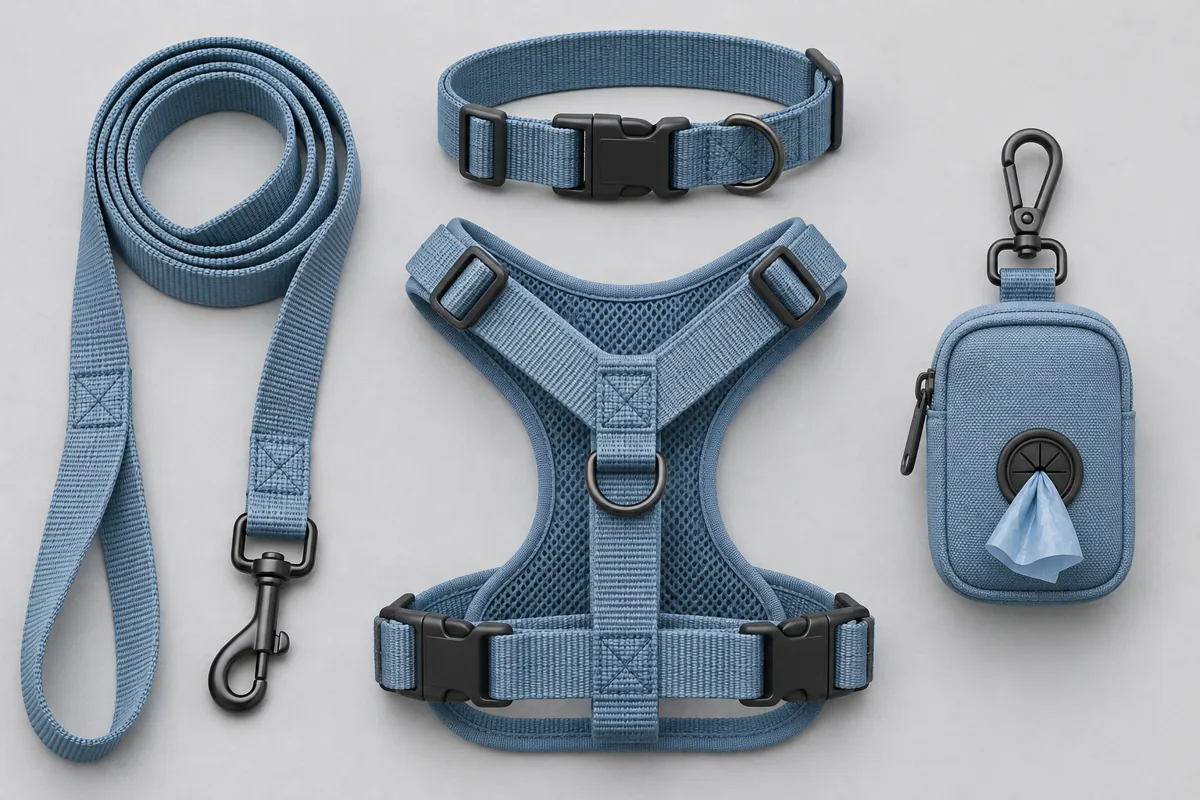 Illustrative collection concept
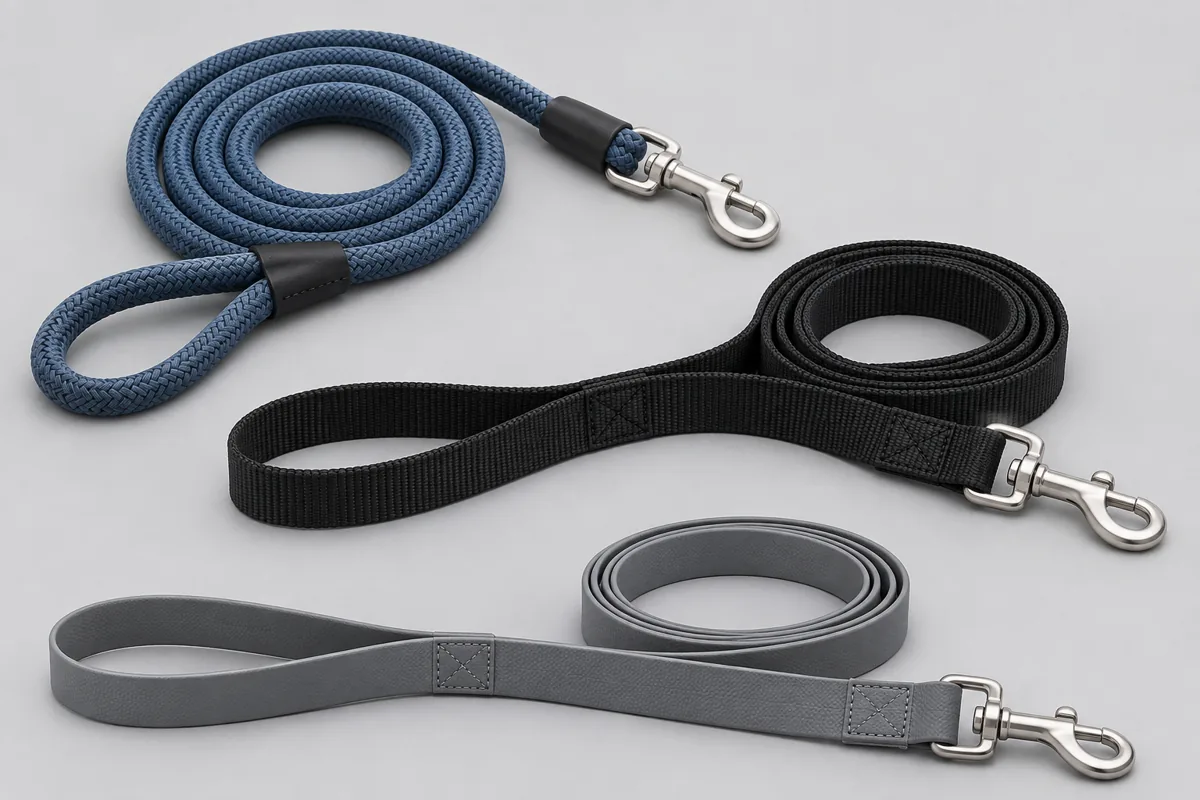
Approve the finished leash, with the chosen clip, strap, stitching and handle assembled. A hardware rating alone does not describe the finished product.
Set the use case and measurements
Write down the intended walk before choosing the construction. A short handle used near a crossing, a long line used in open space and a waist-worn lead create different requirements. Use the same name, revision and sample date in the request, drawing and inspection record.
Define where finished length starts and ends. For a fixed lead, note whether the clip is included and whether the handle is laid flat or extended. For an adjustable or elastic lead, record each usable configuration and the condition in which it is measured. Keep strap width and the handle opening separate from total length.
Inspect the whole load path
Follow the assembly from the hand loop to the clip. Look at stitched folds, loops, rings, rivets and the transition from rope or webbing into the hardware. Check for edges that rub the strap, stitches too close to the edge and movement where the design calls for a fixed attachment.
Request a test plan appropriate to the intended use. Agree the fixture, sample configuration, number of samples, load or cycle method and acceptance criteria before a lab or supplier tests the leash. Record the method alongside results. A clip supplier’s component rating is not proof for the sewn assembly.
| Check | What to record |
|---|---|
| Clip | Closure, rotation and clearance around the intended attachment ring |
| Stitching | Position, thread and visible consistency at each fold |
| Handle | Opening, comfort, wet grip and access with gloves |
| Wear | Edge abrasion, coating cracks, discoloration and corrosion after the agreed conditioning |
Compare the sample after handling
In a hypothetical comparison, two clips fit the same ring. One rotates freely but its spring gate is hard to operate with gloves. The other opens easily but catches on the stitched tab when turned sideways. The nominal size matches, yet the assembly behaves differently. Record the issue in the operating position and repeat with the revised clip and strap together.
If the lead has a second grip, use both grips in the review. For hands-free designs, check the buckle and adjustment in each proposed wearing configuration. Treat a fastener change as a revision; do not approve it from a photo alone.
Close the approval record
Photograph the approved sample on both sides and include close-ups of the clip, handle and label. Compare the product with its packaging and instructions. Confirm that the SKU, dimensions, color and intended use are consistent. Keep unresolved checks open and remove unverified safety or performance wording from the proposed page.
- Keep an identified approved sample and its specification.
- Record what changed since the previous sample.
- Update the SKU and packaging reference if the construction changes.
General product-development guidance. Confirm the selected construction, test scope and destination-market requirements for your project.
Editorial policy