 Rovelanto
A batch record for bird enrichment products
Give bird enrichment components traceable identities, record substitutions before release, and check that the finished pack matches the approved revision.
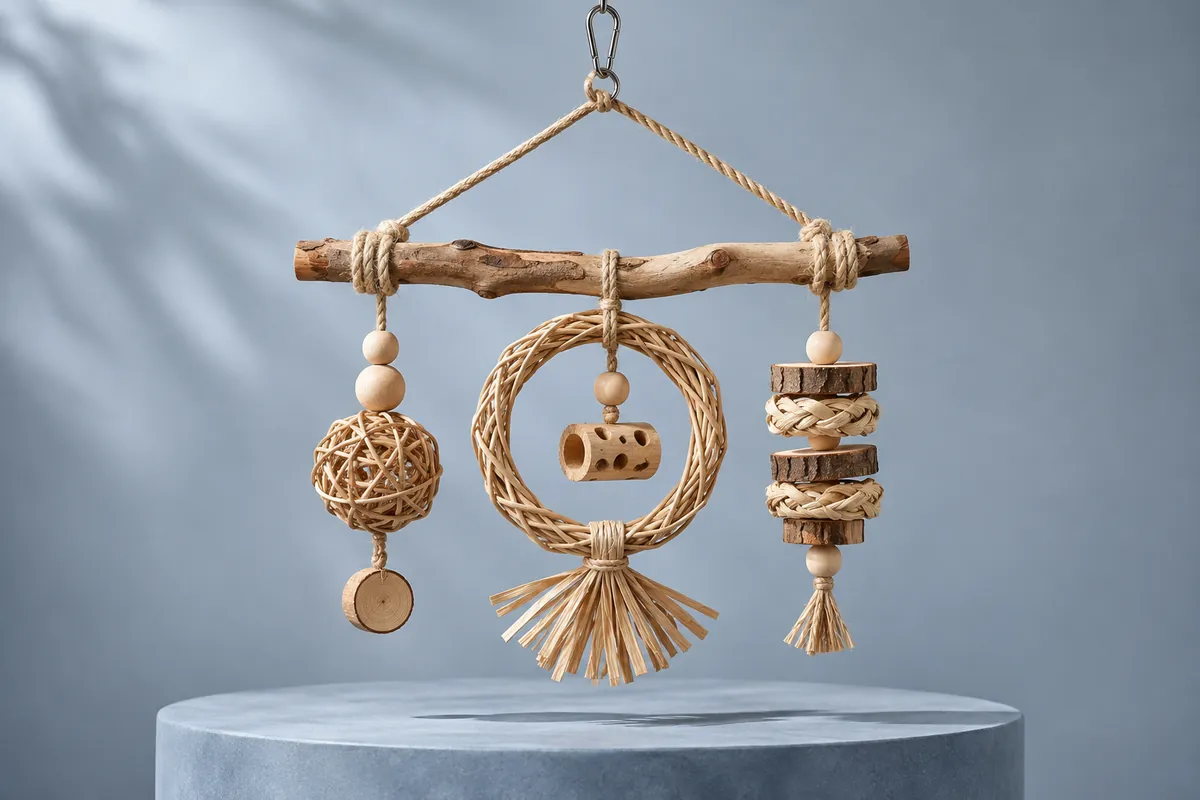 Illustrative collection concept
A batch record should let the buyer identify where a changed component went and which finished stock still matches the approval.
Make every approved component identifiable
A sample made with one set of woven pieces, connectors, and hardware can look much like a later batch made with different inputs. Create a bill of materials that identifies each component and its approved revision. Give the record a single owner and link it to the retained finished sample. For naturally variable components, describe the acceptable appearance range with representative samples or photos; leave material identity and treatment as explicit requirements rather than appearance judgments.
The purpose of the batch record is to connect the approved product, the components that were used, and the finished packs that reached the buyer. A photo of the carton on its own cannot do that.
Keep the record simple enough to use
Agree on the smallest group that production can reliably separate and identify. Give that group a batch code and apply it consistently to the packing record and the relevant pack or carton labels. Record the component references and supplier lot codes used for each group. Ask the factory to explain what happens when a component lot changes in the middle of an assembly run.
| Record | Minimum useful detail |
|---|---|
| Product revision | Approved construction and artwork reference |
| Component lot | Component ID, supplier code, and receiving lot |
| Assembly batch | Production date, quantity, and component lots used |
| Finished packs | Batch code, carton range, and destination |
Worked example: the same shape, a new component source
Suppose the supplier proposes a woven piece that looks like the approved piece but comes from a different subcontractor. Ask the supplier to hold those parts separately and submit the material identification, any treatment information, and a finished assembly sample. Have the responsible reviewer decide what evidence needs to be renewed. If accepted, give the component a new revision and record where it was first used.
If old and new components were mixed before approval and cannot be separated, log that gap. Hold the affected batch pending a decision rather than rewriting its record to imply certainty. Ask the supplier how a similar mix will be prevented on the next run.
Test whether the chain is usable
Pick a carton at random from the proposed shipment and ask the supplier to trace it to a production batch and the component lots. Then reverse the exercise: give the supplier one component lot and ask which finished cartons used it. Record the time needed and any gaps. This is a practical test of the paperwork, not a safety test or a claim about the toy.
Review the retail wording against the approved build. Where an attribute applies to only one part, name that part rather than extending it to the entire product.
Put substitutions into the order terms
Make written approval a requirement for changes to component source, material, finish, geometry, or assembly. Name who can approve the change and who can release the associated batch. Keep a copy of the current record accessible to the team that handles buyer questions and returns. The aim is to identify affected stock quickly and accurately if an issue is reported.
General product-development guidance. Confirm the selected construction, test scope and destination-market requirements for your project.
Editorial policy