 Rovelanto
Natural bird-toy materials: a buyer checklist
Review wood, rattan, grass, fibers, coatings and hanging hardware as a documented bill of materials for bird enrichment products.
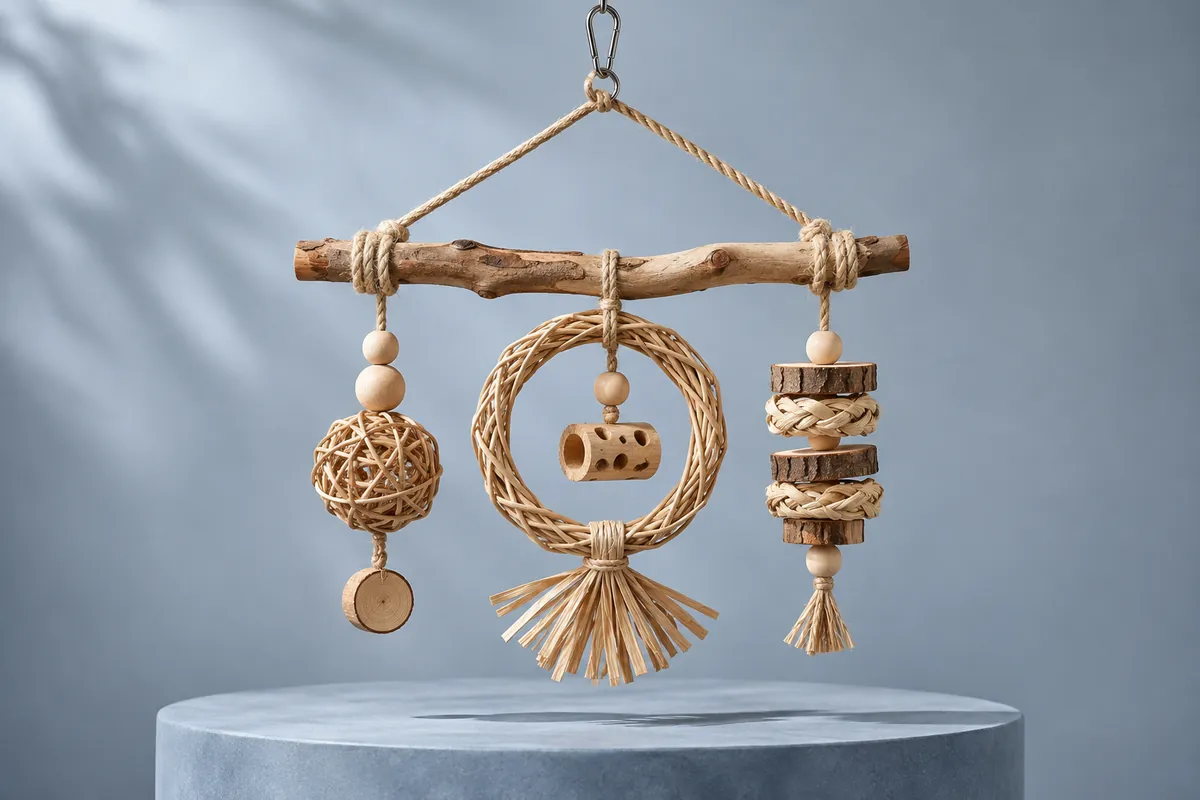 Illustrative collection concept
A credible bird-toy brief identifies every component and bounds the intended use.
Natural is a material description
A natural-looking toy may include dyes, adhesives, metal hardware and processed fibers. The material story should identify all of these parts. Intended bird size, behavior and use conditions matter; a single material label cannot establish that a product is appropriate for every bird.
Ask for a component-level material list
Identify wood species, fiber type, woven components, paper, coatings and hardware. Ask what treatments are applied and whether the supplier can trace the components used in a production batch. Keep any supporting documents connected to the correct component.
| Component | Information to request |
|---|---|
| Wood | Species, processing, treatment and surface finish |
| Rattan and grass | Material identity, treatment and finish |
| Fiber connector | Fiber type, ends, knots and loop dimensions |
| Color | Dye or coating identity and relevant documentation |
| Hardware | Metal, finish, connector geometry and exposed ends |
Review construction for the intended use
Inspect loops, gaps, attachment points and the way components separate during chewing or handling. A softer toy and a hard wood stack can have different intended users. Define sizes and avoid broad statements about all parrots or all small birds without a suitable review basis.
Write inspection and replacement guidance
Chew and foraging items can be consumed or damaged as part of normal interaction. State that the product requires inspection and explain visible conditions that call for removal or replacement. Do not use a durability guarantee as a substitute for use guidance.
- Document full length and component dimensions.
- Inspect loose fibers, hardware and exposed ends.
- Identify soiled or damaged replacement conditions.
- Retain the reviewed sample and material list.
Keep sourcing claims specific
If a recycled, responsibly sourced or untreated material is proposed, ask for the evidence and scope behind the wording. A claim about one component should not be expanded to the entire toy. Record substitutions so an approved construction is not changed by an undocumented material swap.
Handle substitutions at component level
Suppose a supplier proposes changing the cord on a hanging enrichment item because the original material is unavailable. The wood blocks and product photo may look unchanged, but the new cord could change stiffness, fraying, loop shape or the way a knot holds. Treat that as a product change even if the order quantity and finished outline stay the same.
Ask for the revised material list and a sample assembled in the production configuration. Compare the original and replacement cord, its fastening points and the spaces it creates when pulled or bent. Record whether the intended species and use guidance still make sense and send unresolved questions to the appropriate reviewer. Approve the actual component revision and make sure purchase records can distinguish it from the earlier assembly.
- Request material identity and treatment information.
- Inspect the assembled component, not a swatch alone.
- Link the accepted revision to the order and guidance.
General product-development guidance. Confirm the selected construction, test scope and destination-market requirements for your project.
Editorial policy