 Rovelanto
Soft cat furniture: folding and flat-pack design
Compare panels, support channels, cleaning access and pack-down behavior for fabric cat caves, tunnels and soft steps.
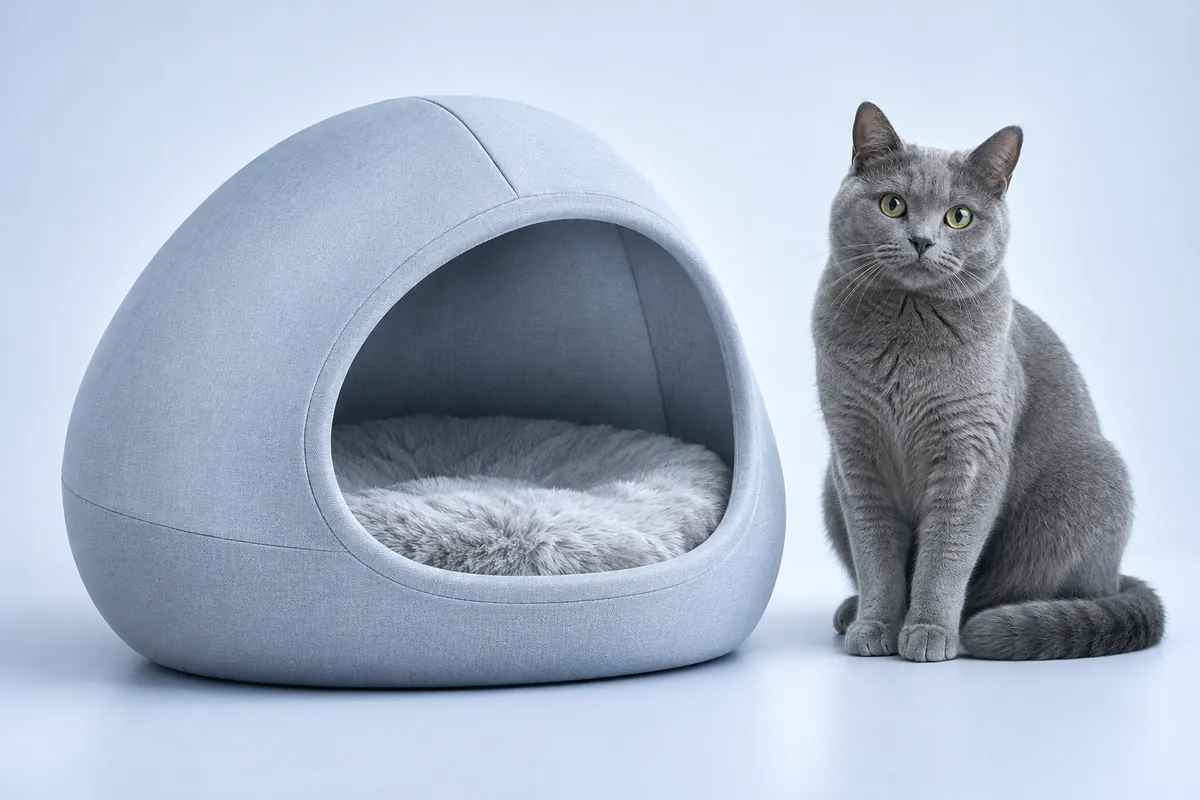 Illustrative collection concept
Engineering, care and packing should describe the same physical construction.
Choose a structure before a silhouette
A tent, tunnel and panel-supported cave can look similar in a catalog but behave differently in use. Identify which parts hold the shape and whether they can be removed. Document the access openings and the way the structure behaves during ordinary handling.
Make cleaning part of the design
A washable cover needs a practical removal sequence. Review closures and panel pockets with the actual support installed. Do not tell the owner to wash a complete assembly if the support material or internal components cannot tolerate that process.
| Format | Useful review questions |
|---|---|
| Panel-supported cave | Can panels be removed and correctly reinserted? |
| Flexible tunnel | Are support ends contained after repeated folding? |
| Foam steps | Does the cover remain stable on the insert? |
| Padded hideaway | Do openings stay clear during normal use? |
Review damage conditions
Normal-use checks are useful, but product teams should also consider what becomes accessible as fabric wears. Inspect seams, panel edges, support channels and loose attachments. State inspection and replacement guidance rather than describing a fabric structure as indestructible.
Pack down without losing the intended shape
A flat pack should have a clear folding method and simple assembly sequence. Measure the packed size and check the product after storage in that condition. Include instructions when orientation or panel placement matters.
- Record the fold sequence in the product file.
- Check repeated setup and pack-down.
- Review exposed ties and support ends.
- Confirm that the retail pack includes every component.
Define the claims the sample can support
Do not infer load ratings or therapeutic benefits from shape or foam thickness. If the product requires a load rating, agree a suitable test plan for the intended construction and use. Keep the tested revision linked to the public product description.
Run the handoff without verbal instructions
Picture a foldable cat hideaway whose cover can be removed, but only if the frame is folded halfway first. The designer knows the sequence; a retail customer does not. If the sample can be reassembled with the cover twisted or a fastening point left loose, the issue belongs in both the construction review and the instructions, not in one or the other.
Give a clean sample, package and draft leaflet to a reviewer who has not seen it assembled. Ask them to unpack, assemble, remove the cover and put it back without help. Note exactly where they pause or reverse direction, then inspect how the finished frame sits. A keyed tab, visible alignment mark or clearer step photo can be more useful than adding several paragraphs of instructions.
- Use the production-style package and draft leaflet.
- Record hesitation and plausible wrong assembly.
- Repeat the sequence with the corrected sample.
General product-development guidance. Confirm the selected construction, test scope and destination-market requirements for your project.
Editorial policy