 Rovelanto
How to write a useful small-pet hideaway size guide
Reduce ambiguous fit descriptions by publishing outside dimensions, clear opening measurements, and the intended installed orientation.
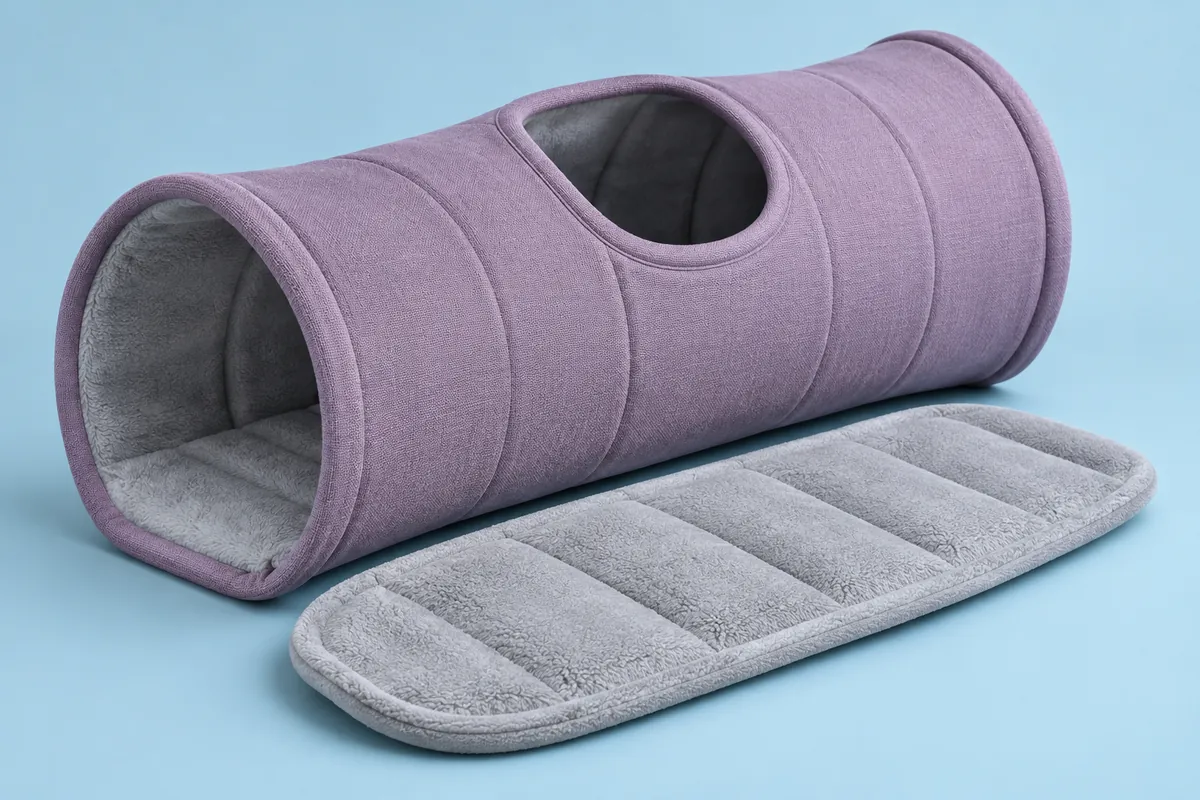 Illustrative collection concept
Show the enclosure space required and the actual clear opening; a nominal size label cannot communicate either on its own.
Answer two different fit questions
A retailer needs to explain both whether the hideaway fits the available enclosure space and what the opening and interior actually measure. These dimensions are easy to confuse. A tall outside height can include a thick base and roof, while a broad façade can surround a narrow opening. Give outside and inside dimensions separate names on the drawing, sample sheet, and listing.
Ask the product reviewer to define the intended animals and configuration. Avoid inferring suitability from a marketing label such as “small,” “medium,” or “all breeds.” A measurement guide helps the customer understand fit; suitability also depends on construction, intended use, and the animal.
Measure in the condition you will publish
Assemble or unfold the product according to its instructions. Measure the largest outside footprint and the clear opening at its narrowest point without pulling the material wider. Define how to measure the interior where sides taper or fabric bends. If the structure can shift under ordinary handling, show the typical finished dimensions and agree a realistic tolerance rather than choosing the largest measurement you can obtain.
| Listing field | What to show |
|---|---|
| Outside footprint | Widest assembled length and width |
| Opening | Clear width and height in installed position |
| Interior | Usable dimensions at the defined measuring points |
| Orientation | Which face opens and where access is needed |
Worked example: two “medium” products
Imagine two hideaways have the same listed width. One opens on the short side and the other on the long side. A buyer may set both against the same enclosure wall and discover that one opening faces a tray edge. Show an overhead drawing with an arrow identifying the opening and mark the wall clearances the reviewer recommends. Give each product its own fit note.
If the narrowest opening falls below the published drawing tolerance on some samples, fix the specification or update the listing based on the approved measured range. Do not move the measuring point to obtain a more favorable number.
Make the size illustration useful on a phone
Use one outside view and one simple drawing with only the most important dimensions. Name the units next to every value. Repeat the dimensions in text so a customer does not have to zoom into an image. Keep size names, photos, and measurements linked to their exact variant. If you include a lifestyle photo, make sure it is labeled as an example and does not imply an enclosure or animal size that the reviewer has not approved.
Create a fit-feedback loop
Give customer service a short checklist for returns: enclosure model, available space, variant purchased, and which dimension or orientation caused the problem. Log whether the listing, construction, or selection process needs changing. When a vendor revises the frame, textile, or base, verify the installed measurements again and make sure pack stock and online dimensions remain aligned. A size guide is more useful when it follows the product through revisions instead of being treated as launch artwork.
General product-development guidance. Confirm the selected construction, test scope and destination-market requirements for your project.
Editorial policy