 Rovelanto
Washable small-pet liners: fit, layers and care
Develop enclosure liners and fabric hideaways around usable dimensions, layer construction, drying and damage inspection.
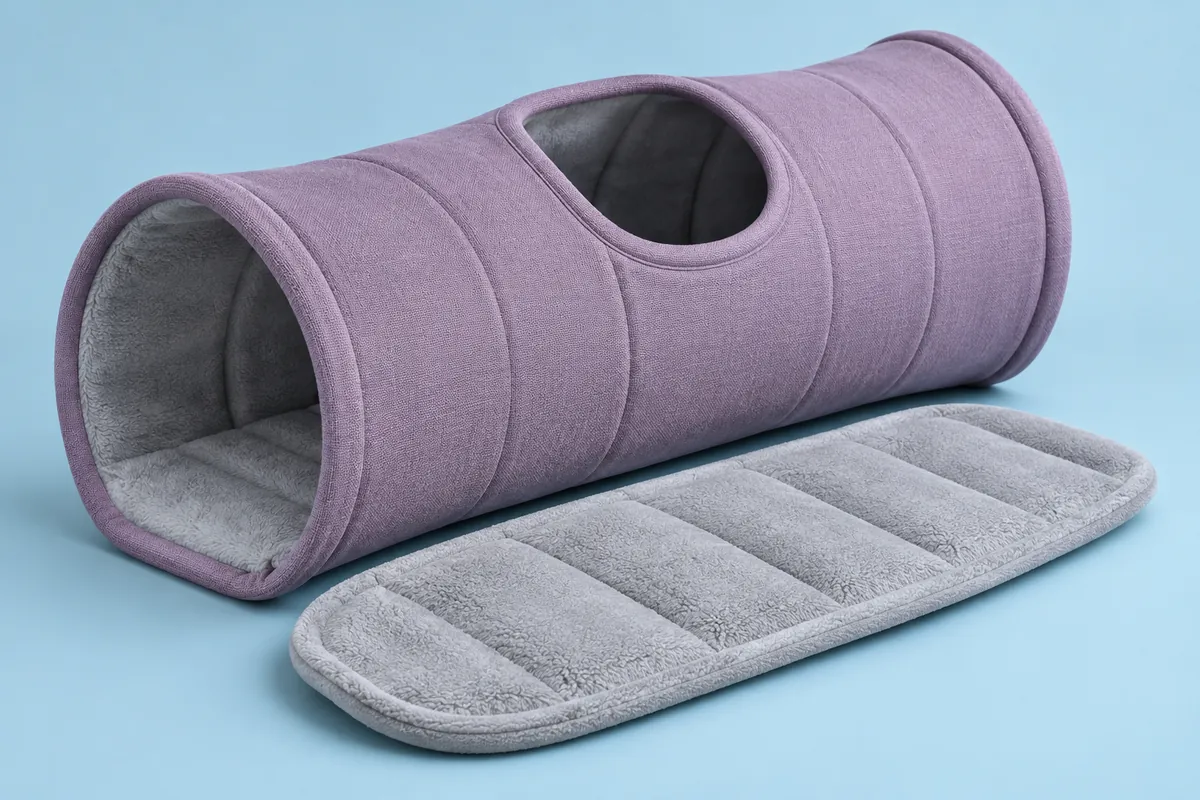 Illustrative collection concept
Useful small-pet textiles combine measured fit, a defined layer system and a realistic care routine.
Measure the enclosure you actually have
Record the internal footprint, corners and any raised features. Decide whether the liner should lie loose or use attachments. A nominal cage size is rarely enough to define a fitted textile, especially when different enclosures use similar size names.
Specify every layer
The surface, absorbent core and backing do different jobs. Ask for material identity, construction and thickness or weight where useful. Review the sample as an assembly because layers can change drying, flexibility and washing behavior when combined.
| Layer or detail | Review question |
|---|---|
| Surface | How does it feel and behave after the proposed wash? |
| Core | What absorbency procedure is being used? |
| Backing | Is a barrier required and what are its limits? |
| Edges | Are seams and fibers accessible to chewing? |
| Attachment | Can the liner be removed without loose small parts? |
Compare care under agreed conditions
Record preparation before use, washing and drying instructions. Measure dimensions and inspect seams after the care trial. Drying time depends on the complete construction and conditions, so avoid publishing a universal claim based on a single observation.
Review accessible textile parts
Textiles are not chew-proof. Inspect edges, bindings, ties and supports for the intended use. Include regular damage checks and clear replacement guidance. For a hideaway or tunnel, review usable openings and whether the structure can collapse or expose a support.
- Keep interior dimensions on the specification.
- Check shrinkage and edge curling.
- Separate liner care from structural-part care.
- Record inspection and replacement instructions.
Build a compatible range
A liner, hideaway and tunnel can share fabric choices, but their construction needs differ. Use a shared palette and distinct component specifications. Keep packaging and quantity splits visible so adding one accessory does not create an unmanageable material minimum.
Check the corners after washing
Consider two liner samples with identical nominal dimensions. One covers the usable tray floor after washing but curls at the bound corners. The other lies flatter but has shrunk enough to leave a gap along one edge. A checklist that only records the center length would miss part of the fit problem in both examples.
Draw a simple tray outline and mark the points where the liner meets a curve, step or opening. Measure the dry sample before the trial, follow the proposed care instructions and let it return to the same dry condition before taking another reading. Photograph the liner in the tray, including any raised edges or exposed layers. If a revision is needed, identify whether it should change the binding, the cut dimensions or the material combination.
- Measure the same locations before and after care.
- Inspect corners and layers as well as length.
- Agree the revised fit before changing the advertised size.
General product-development guidance. Confirm the selected construction, test scope and destination-market requirements for your project.
Editorial policy