 Rovelanto
How to run a repeat wash trial for enclosure liners
Compare liner samples after agreed wash cycles, tracking length, width, edge curl, layer movement, and fit in the actual enclosure.
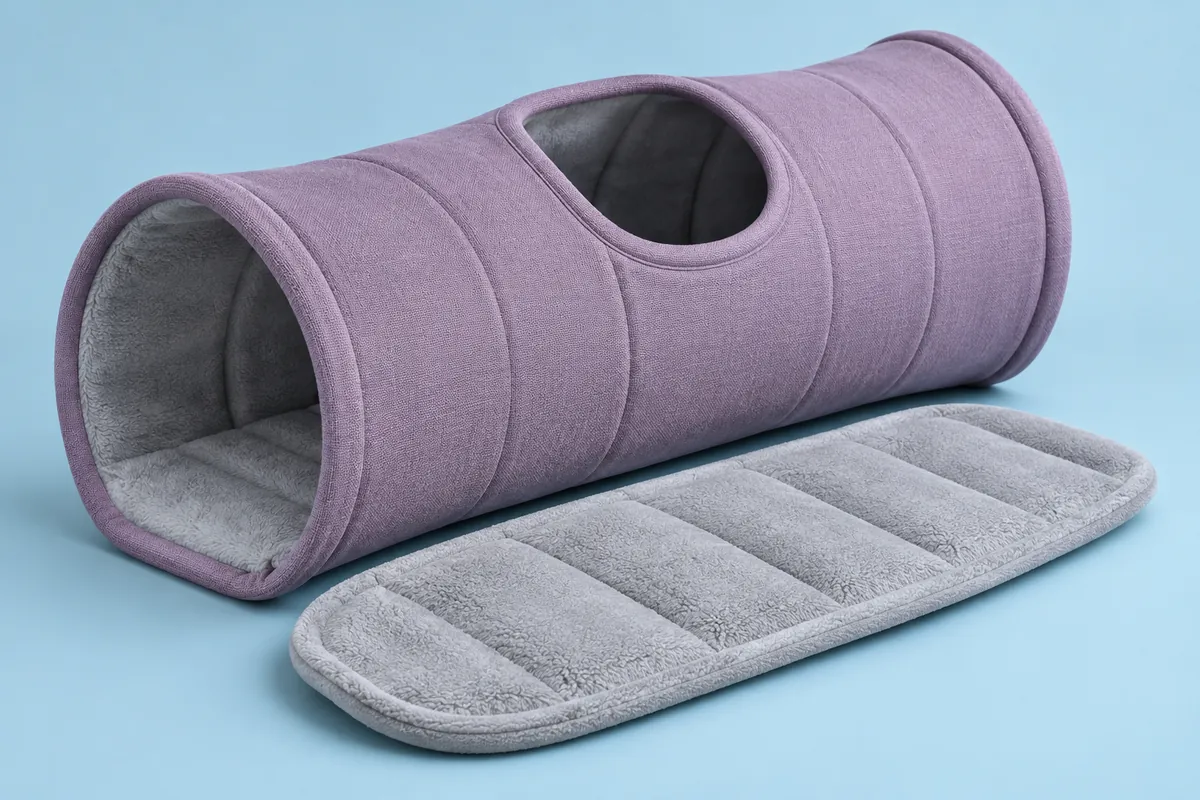 Illustrative collection concept
Measure the same points before and after each agreed interval, then verify real tray fit before confirming care wording.
Decide what the wash trial must answer
A new liner may fit neatly in its tray on day one. The useful buying question is whether it still fits and can be handled as intended after the care routine printed on the pack. Decide which outcomes matter for your construction: dimensional change, lifted corners, seam damage, movement between layers, or a combination. Use representative assembled samples with the intended binding, backing, and care label.
Set the wash and dry settings before starting. They should match the proposed consumer instructions. Where you need a standardized test or a claim for a specific market, agree the method with the responsible reviewer or lab separately. This guide is a practical way to compare samples under a defined routine.
Use repeatable measurement points
Label each liner and photograph it laid flat without pulling the corners. Record length and width between marked points. Measure additional positions if the tray shape or seams make fit sensitive. Note the original condition of the binding, corners, and backing. After each review interval, allow the sample to dry under the agreed conditions, then repeat the same measurements.
| Check | Evidence |
|---|---|
| Length and width | Before and after measurements at marked points |
| Edge curl | Side view and location, with the sample laid flat |
| Layer movement | Photo and notes on bunching or separation |
| Tray fit | View of the sample installed in the intended tray |
Worked example: the average hides a fit issue
Suppose an illustrative sample measures 600 × 400 mm before washing and 591 × 398 mm afterward. The changes are 1.5% in length and 0.5% in width. An average of the two numbers conceals the difference between directions. If the tray design depends on the long edge lying close to a divider, the length change is the one to discuss with the supplier.
Now imagine a second sample changes less overall but curls at two corners. The smaller dimensional change does not make it a better fit. Review the measurements and installed condition together, using photos so the supplier can see the difference.
Separate the likely causes before making changes
If a liner moves or curls, compare the result at seams and in the main body. A binding issue can require a different correction than uneven movement between layers. Ask the supplier to change one construction variable in the next sample if possible. Repeat the same routine so you can compare results. Do not promise a fixed drying time or number of washes based on a single trial.
Keep the care wording attached to the sample
Record what was tested, what happened, and which revision was accepted. Compare the instructions on the pack with the actual settings used. Add the approved sample to the production file and identify any early signs that should trigger inspection or replacement in the customer guidance. If the textile, binding, or backing changes later, decide which measurements and fitted checks need to be repeated before using the old care wording again.
General product-development guidance. Confirm the selected construction, test scope and destination-market requirements for your project.
Editorial policy