 Rovelanto
Pet-bed fillings and cover construction
Compare fiberfill, foam inserts, zipper access and care instructions when developing a washable private-label pet bed.
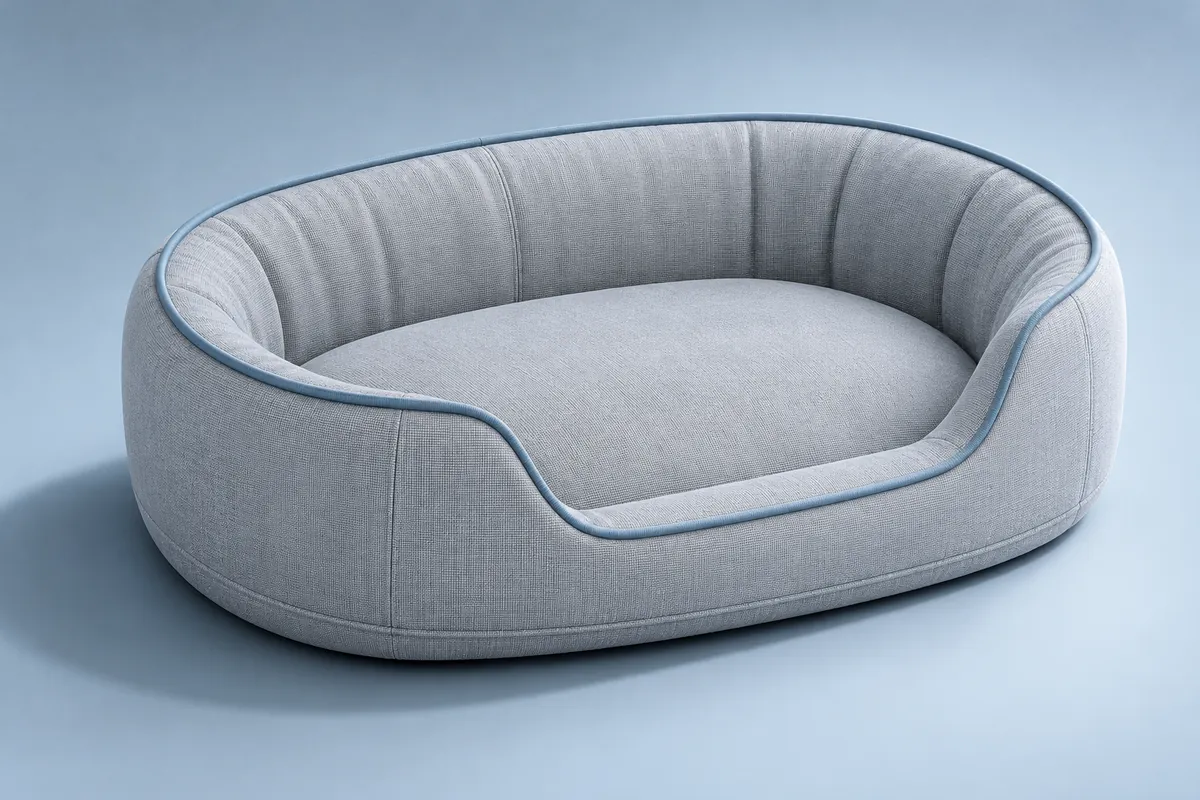 Illustrative collection concept
Choose cover access, filling and packing together, then record the care method that the sample supports.
Treat the bed as a system
The cover, inner casing, filling and base form one assembly. A removable cover is useful only when it can be removed without excessive effort and refitted after washing. Begin with a simple construction drawing that identifies each component and whether it is replaceable or washable.
Compare filling choices by the intended job
Fiberfill, cut foam and layered inserts each introduce different control points. Ask for measurable specifications rather than a feel-good name. A sample can compare softness, shape and handling; broader support or health claims need a separate evidence basis.
| Insert type | Specification to request | Review point |
|---|---|---|
| Fiberfill | Fiber identity, fill weight and chamber layout | Migration and shape after handling |
| Cut foam | Dimensions, grade and density where specified | Recovery and consistency |
| Layered insert | Layer order, thickness and assembly | Movement between layers |
| Removable cushion | Casing, closure and fit | Removal, refitting and care |
Design the zipper around the insert
Zipper length and placement should allow the intended insert to pass without stressing seams. Review exposed hardware, zipper-end finishing and any internal flap. A hidden closure is not automatically a better closure if it makes replacement difficult or traps the filling.
Validate the actual care sequence
Write down which part is washed, which part is spot cleaned and which part must remain dry. Confirm wash settings and drying instructions for the selected materials. Test the assembled cover, not only the fabric swatch, because seams, trims and backing can behave differently.
- Measure before and after the agreed wash procedure.
- Check cover removal and refitting.
- Record shedding, seam appearance and backing condition.
- Review label placement and readability.
Keep packing linked to the construction
Compression can change both the unboxing experience and the final shape. Review the chosen insert and cover after the proposed packing method. Finalize carton data only after a packing sample, and avoid promises about universal recovery time without evidence from the selected construction.
Compare two complete assemblies
Imagine two beds with the same outside measurements. One uses a single shaped insert; the other uses a separate bolster and a removable base cushion. At review, the loose parts of the second design are easier to handle, but the owner has to remember which way the bolster goes back. The single insert is straightforward to place, but the opening needs more clearance for removal.
Lay both assemblies out and label the order of disassembly. Have a reviewer remove and refit each cover without coaching, then inspect corner tension, zipper alignment and gaps. Compare the packed product as well: if a material change affects the pack-out, run the check with the actual cover and insert together. A decision about an insert should state what it improves and what the cover or packaging must change to accommodate it.
- Photograph the order of disassembly.
- Check zipper access with the full insert in place.
- Approve the complete combination, not the filling alone.
General product-development guidance. Confirm the selected construction, test scope and destination-market requirements for your project.
Editorial policy