 Rovelanto
How to specify a crate pad that fits
Use internal dimensions, corner shape, quilt layout and wash tolerance to develop a useful crate-pad size assortment.
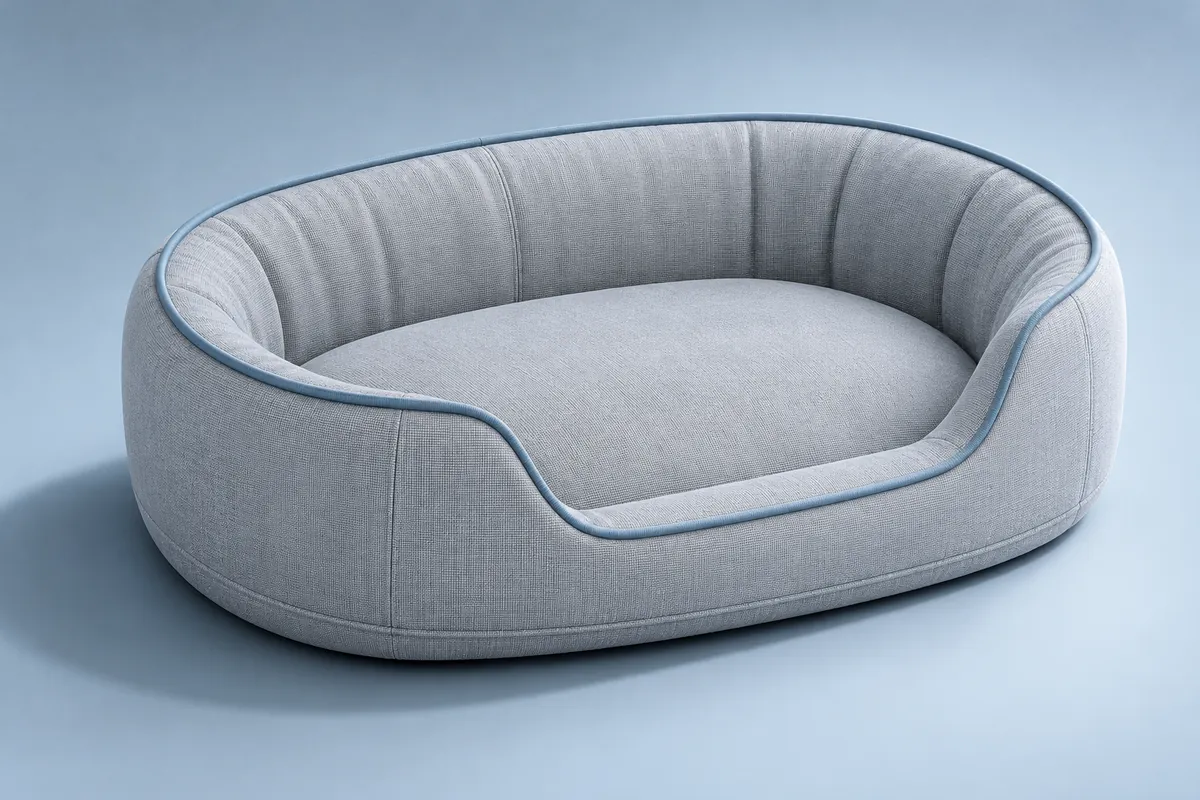 Illustrative collection concept
Fit is a measured relationship between the enclosure, the finished pad and its condition after care.
Use the usable interior
The exterior crate size is not the sleeping footprint. Measure the interior floor, corner shape and any intrusion from the door or frame. Record the smallest usable space and the intended clearance. Keep the measurement method with the product specification so a replacement sample can be checked consistently.
Define thickness and construction
Finished thickness depends on the filling, quilt pattern and handling condition. State how it is measured and avoid compressing the pad differently for every inspection. Consider how the thickness affects door access, cleaning and carton capacity.
| Dimension | Why it matters |
|---|---|
| Usable length and width | Fit to the actual floor space |
| Corner radius | Avoids bunching at rounded corners |
| Finished thickness | Controls clearance and packing |
| Quilt spacing | Influences fill movement and appearance |
| Wash tolerance | Determines fit after care |
Treat quilting as a functional decision
A quilt pattern is more than decoration. It can help keep filling distributed, but excessive stitching can change the feel and how layers move. Compare the sample after folding, handling and washing. Look at corners and binding joins where the product is likely to be stressed.
Approve the size range efficiently
Group pads by construction and material before adding sizes. A long list of nominal dimensions can create tiny order splits and packaging complexity. Ask which sizes share fabric width and packing method, then build the first range around clear enclosure use cases.
- Keep a labeled fit sample for key enclosure sizes.
- Record edge clearance rather than relying on a tight fit.
- Recheck dimensions after the care trial.
- Confirm barcode and carton labels by size.
Make the retail information useful
Show finished dimensions and a clear care method. Avoid saying that a pad fits all crates of a nominal size. If compatible models are listed, retain the measurement basis and review changes to those enclosures before repeating the claim.
Measure the floor, then test the doorway
A hypothetical crate is listed by an exterior length of 76 cm. At floor level it narrows around the corners and has a raised lip beside the doorway. A pad cut to the headline dimension buckles near the corners, and a thicker prototype catches under the door swing. Adding a single universal deduction to all crate sizes would not resolve both problems.
Sketch the narrow points, usable flat floor and door travel separately. Lay a paper template in the crate before cutting fabric. When the prototype arrives, test it empty, then repeat after the planned wash and refit cycle. Record whether it lies flat, moves under ordinary handling or interferes with the door. Write dimensions as measured pad dimensions and state which crate examples were checked instead of claiming a universal fit.
- Mark the usable floor and corner shape.
- Check door travel with the full pad thickness.
- Repeat the fit after the planned care cycle.
General product-development guidance. Confirm the selected construction, test scope and destination-market requirements for your project.
Editorial policy