 Rovelanto
Checking harness access on a dog coat
Test opening location, usable clearance and garment movement with the harness configurations your dog-coat range is intended to accommodate.
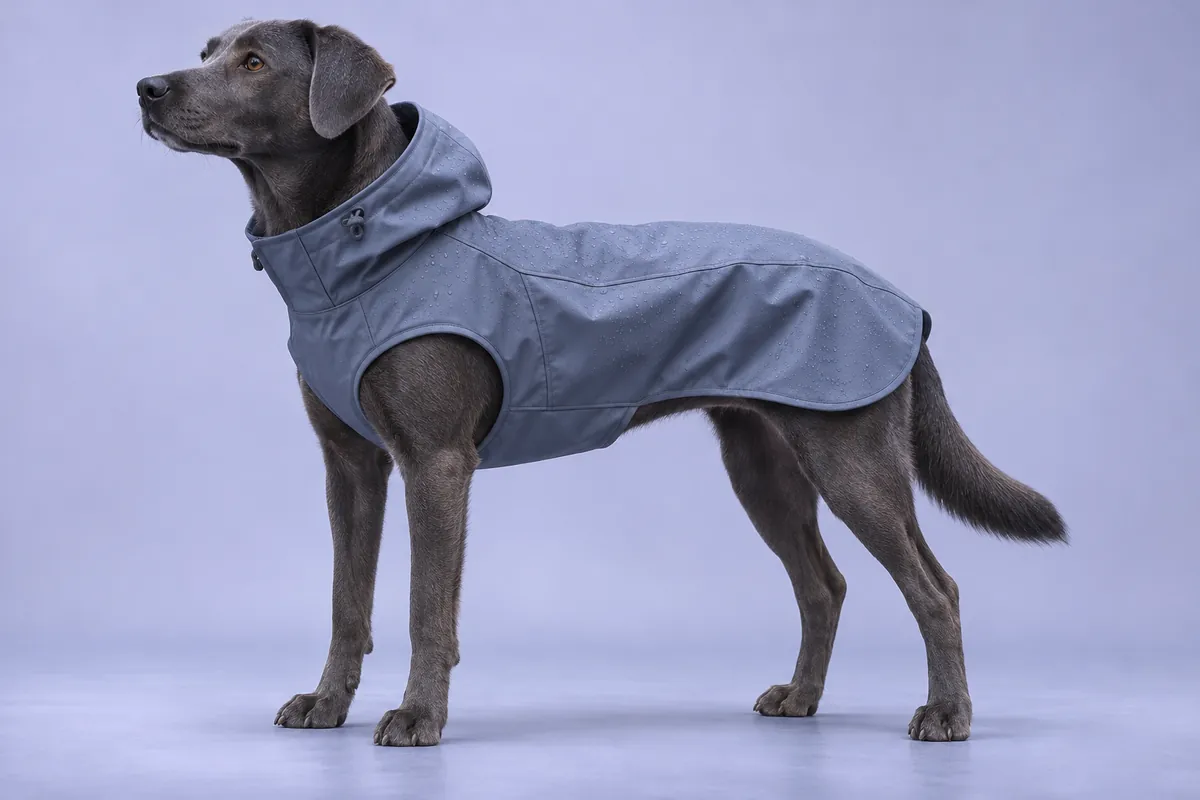 Illustrative collection concept
Approve access against named harness configurations and garment sizes, with fit and animal restraint reviewed separately.
Decide what the opening must accommodate
An access opening in a dog coat lets the wearer reach a separate attachment point. Identify whether the design is meant for a rear harness ring, collar access or a defined set of configurations. Describe the intended layering order and record the garment and harness sizes used for assessment. An opening can expose one ring while covering another that sits further forward. A wide opening alone does not establish compatibility with every harness.
Start with a suitably sized fit form or mannequin for placement and clearance checks. If your normal process includes an animal fit session, keep it short and supervised. Use observations to assess garment movement and do not treat the coat as load-bearing equipment.
Check access across positions and sizes
Place the harness and coat in the intended order. Without applying a load, check whether the ring is visible, can be reached by hand and has usable clearance for the nominated clip shape. Repeat with the garment fully fastened, including any storm flap or second closure. Observe the opening and ring in different intended fit positions. Note when the coat shifts, gathers or presses the ring against an edge. Record the physical samples used so a different outcome can be reproduced.
| Record | Why it is needed |
|---|---|
| Garment revision and size | Identifies the pattern and grading under review |
| Harness type and attachment point | Defines compatibility actually checked |
| Opening position and clear length | Lets the team repeat the access check |
| Observed movement | Shows whether a static photo missed a fit problem |
Review the trade-offs around the opening
A larger opening may improve hand access but change how a flap sits or how an upper panel behaves in rain. A stiff zip or binding may make access easy when the coat lies flat and awkward when it curves around the shoulder. Look at stitch ends, overlap, closure direction and the opening edge with the garment fitted. If a choice shifts a seam or closure, repeat the affected checks. Keep access observations distinct from weather performance or restraint claims.
Turn a failed fit into a specific change request
Suppose a ring sits behind the opening on the small coat but aligns on the medium sample. Ask for placement measurements from a stable pattern reference on both sizes. The next revision should answer whether the opening needs a different graded position, a clear-length change or a narrower compatibility statement. Annotate a photograph, label the samples and repeat the configurations on the revised sizes. Include one configuration that previously passed so you can see whether the correction created a new issue. Keep the resulting fit matrix with the artwork and product copy so retail teams can describe the combinations actually checked.
General product-development guidance. Confirm the selected construction, test scope and destination-market requirements for your project.
Editorial policy