 Rovelanto
Dog raincoats: fabric, lining and seams
Evaluate the complete raincoat construction, including coated fabric, seams, closures and movement, before approving a sample.
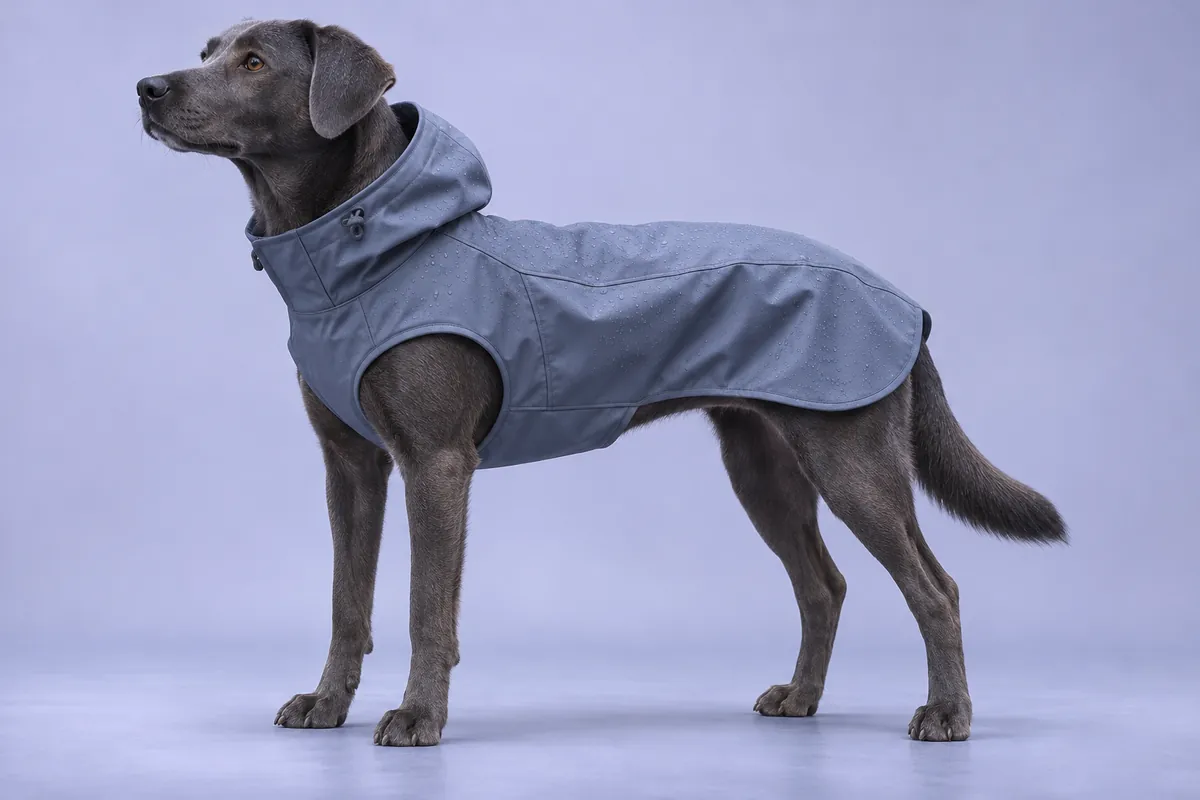 Illustrative collection concept
Approve the full raincoat system; shell fabric alone does not establish garment performance.
Specify the use before the weather claim
A light layer for brief urban walks and a lined coat for prolonged outdoor use need different briefs. State the expected conditions, coverage and cleaning method. Then decide which performance claims need evidence. Avoid converting a fabric specification into a complete-garment promise.
Compare the shell and lining separately
Ask for the shell composition, construction, coating and weight. Review hand feel, noise and flexibility as well as appearance. A lining changes bulk, drying and movement. Mesh, jersey and fleece should be selected for a defined purpose, not added because more layers sound premium.
| Component | Questions for the sample |
|---|---|
| Shell | What coating and test method describe the fabric? |
| Seams | Where can water enter; is seam treatment required? |
| Closures | How is overlap maintained during movement? |
| Lead opening | Does the opening expose the underlying layer? |
| Lining | How does it affect fit, drying and care? |
Look at likely entry points
Inspect the back opening, chest overlap, neck and attachment seams. Record how water exposure will be evaluated on the selected assembly. A test should define duration, orientation and pass conditions. If no complete-garment test has been performed, describe the construction and leave the broad performance claim unmade.
Test movement and care together
A stiff shell or badly placed closure can restrict movement even when it looks correct on a table. Review chest expansion, shoulder movement and underbody clearance. Repeat relevant checks after the agreed care procedure to understand changes in coating, trim and fit.
- Approve the exact shell and lining combination.
- Check closure overlap in each reviewed size.
- Inspect reflective trim attachment and backing.
- Keep the tested sample and material references.
Write a decision-ready approval
The approval record should state the pattern revision, shell and lining references, critical dimensions, closure details and claim evidence. If a material changes later, revisit the affected checks rather than assuming the original approval still applies.
Trace the first visible wet spot
A buyer compares two coats cut from the same shell. After the same controlled spray exposure, one shows moisture near the leash opening and the other near a stitched front seam. It would be misleading to conclude that the shell fabric itself is the cause. The leak path may be along the opening, across thread perforations or from water that ran down the garment when it moved.
Photograph the outside before removing the coat from the test form. Turn the lining back in a consistent order and mark the first visible damp area on a sketch. Repeat with a fresh, dry sample after altering only the suspected construction. If the new flap helps while the seam still wets through, record those findings separately. Translate the result into the brief without converting an in-house screening trial into a certified weather rating.
- Keep exposure and garment angle comparable.
- Record position and suspected route separately.
- Change one construction variable before repeating.
General product-development guidance. Confirm the selected construction, test scope and destination-market requirements for your project.
Editorial policy