 Rovelanto
A buyer’s sample review for folding pet bowls
Approve a folding pet bowl by checking the rim, opening sequence, base, usable fill line, and the exact parts used in each color.
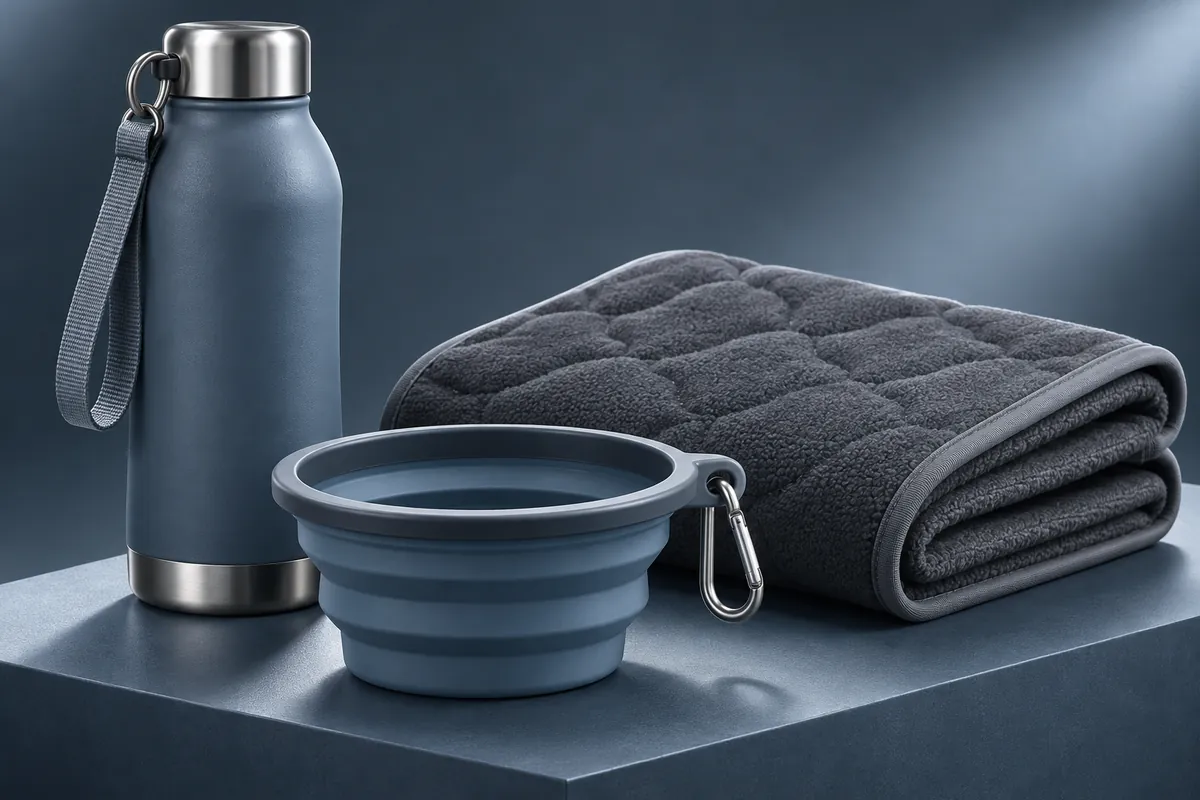 Illustrative collection concept
Compare finished bowls at the same fill level and on the same surface, then tie the approval to the exact material and build.
Compare the bowls customers will actually receive
A bowl can fold to the right thickness and still be frustrating to open, fill, or clean. Request samples with the intended rim, base, attachment loop, and color. If the preproduction bowl has a temporary rim or a different molding material, mark those parts explicitly and keep that sample out of the final approval record.
Write down the intended contents, carrying method, and care instructions. A dry-food bowl, a portable drinking bowl, and a bowl sold with a filled-water carrying claim have different review needs. Check only the uses you plan to describe on the pack.
Measure usable fill rather than edge capacity
Set the open bowl on a level surface. Agree where the usable fill line sits and choose a repeatable way to measure to that line. A brim measurement is useful for drawings but may not reflect how much a customer can use comfortably. Compare bowls at the same fill condition and note whether their shape changes as they are filled. Record the open and folded dimensions separately, including protruding clips or loops.
| Check | Why it matters |
|---|---|
| Usable fill | Aligns the stated capacity with the way the bowl is used |
| Folded dimensions | Confirms pocket, pouch, or pack fit |
| Rim shape | Shows whether the bowl stays evenly open |
| Base contact | Makes movement or rocking easy to document |
Try the entire opening and cleaning sequence
Ask reviewers to unfold the empty bowl, fill it to the agreed line, empty it, and fold it again. Do they need to grip both sides, or can they operate it as your instructions suggest? Note where folds collect residue and whether the rim or loop creates a corner that is hard to rinse. If you expect the bowl to open and close repeatedly, agree a repeat-cycle review and log any change in the hinge or fold area.
A handling review does not establish a lifetime or confirm compliance. Document the procedure and the sample revision instead of turning the result into a general durability promise.
Worked example: a new rim, the same mold
Suppose the bowl body stays unchanged but the supplier switches the stiff ring to a different plastic. The folded dimensions can still match while the bowl opens differently or the ring sits proud after cleaning. Compare the assemblies side by side. Ask for updated material documentation where the change affects food or water contact, and check whether the change alters the retailer's care wording or product description.
Apply the same reasoning to a pigment change. Ask which components and color variants the existing documentation covers rather than assuming a report covers every SKU.
Close the approval by component
Keep a labeled reference sample, a parts list, a usable fill measurement, and photos of the approved folded and open positions. Have the intended market and use reviewed separately when preparing documentation. Confirm that the product listing and outer pack use the same dimensions and capacity basis. When a change is made, update the evidence for the component that changed and rerun any assembly checks it affects.
General product-development guidance. Confirm the selected construction, test scope and destination-market requirements for your project.
Editorial policy