Rovelanto
How to cost a pet travel bundle by carton
Use packed carton dimensions, units per carton, and channel fees to compare a boxed travel kit with separate retail accessories.
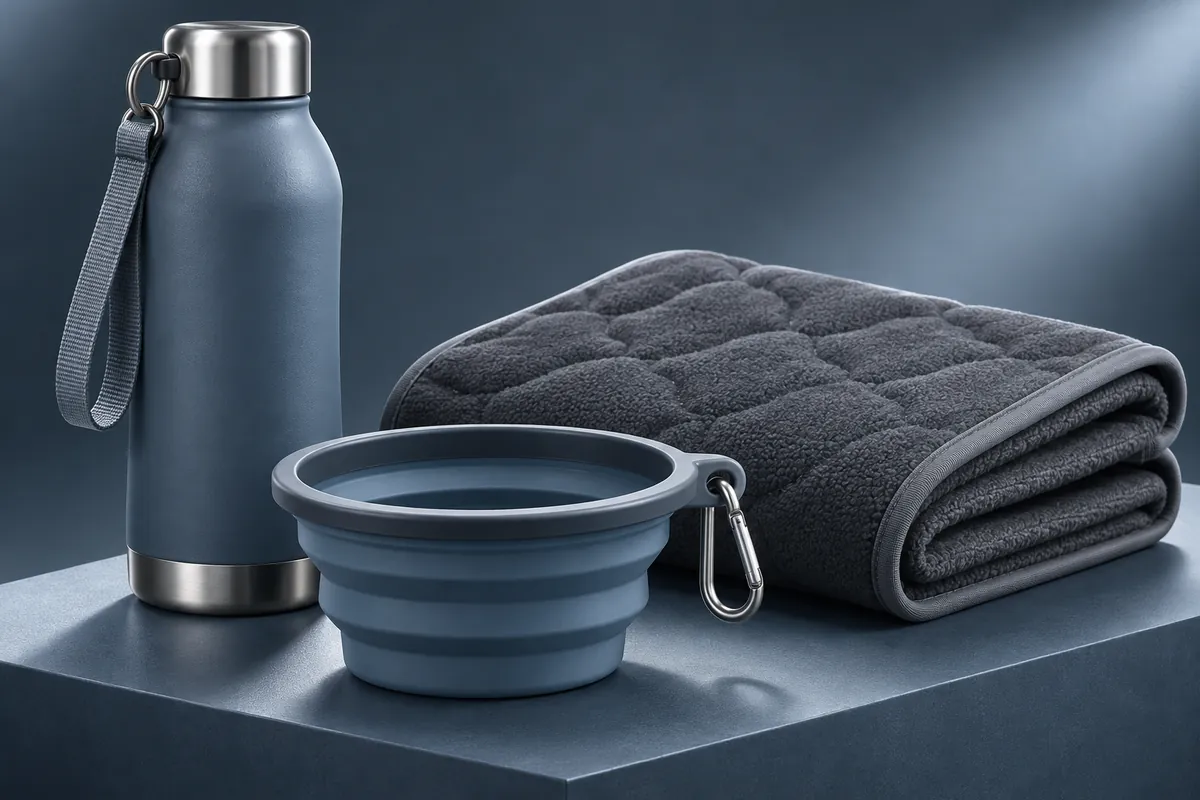 Illustrative collection concept
Request actual pack-out measurements and compare the cost per sellable kit under the same shipment and channel assumptions.
Put the packed unit into the quote
A low component price can be offset by a bulky tray, a carton that ships mostly empty, or a kit that crosses a retailer's fulfillment size band. Ask for a photo of the final retail pack inside the master carton. Record outer carton dimensions, gross weight, units per carton, and the number of sellable kits produced by that pack-out. These figures should describe the packed unit your forwarder and warehouse will receive.
If the accessories can also be sold separately, request the same fields for the separate packs. Decide which comparisons matter for the sales channel: the cost per ordered accessory, the cost per complete bundle, or both.
Compare volume per sellable unit
Calculate outer carton volume using metres, then divide by the number of sellable units in the carton. Keep weight and volume as separate fields: the carrier or warehouse may price them differently. Use outer dimensions measured after packing, and round only when you apply your provider's quoting rules.
These figures are fictional and compare two ways of packing the same kit. At 600 kits, the example implies 5.4 m³ for the gift carton and 2.88 m³ for the sleeve before pallet or shipment adjustments. This does not translate directly into a freight saving. Ask your provider to price both shipment configurations.
| Illustrative pack-out | Outer carton | Units | Volume per kit |
|---|---|---|---|
| Large gift carton | 60 × 40 × 45 cm | 12 | 0.009 m³ |
| Slim retail sleeve | 60 × 40 × 30 cm | 15 | 0.0048 m³ |
Add the costs that move with pack format
Use a worksheet with columns for product, retail pack, inbound freight, fulfillment, and rework. A lighter sleeve may need extra handling if units arrive scuffed or if the presentation requires the retailer to reassemble it. A gift carton may fit one channel's positioning but cost more to store and fulfill. Model those differences with rates from your own providers rather than copying generic fees.
- Record whether kitting occurs at the factory or at the receiving warehouse.
- Show the cost of unused accessories if one component ships short.
- Check that your comparison assumes the same destination, volume, and selling period.
- Add a scenario for repacking damaged sets before committing to a large run.
Review what can go wrong in a mixed carton
Have the supplier pack one complete carton and verify counts by SKU. Check that each product remains identifiable if the packaging is opened or a kit is returned. If components can be replenished separately, keep their revision codes and reorder quantities visible. A replacement bowl that no longer fits the sleeve can turn a small shortage into a repacking job.
Make the decision with a threshold
Decide how much additional landed cost the larger presentation can justify. Compare this with the price or contribution the channel expects it to earn. Use a small pilot to validate the assumptions most likely to change the result, such as retail damage or warehouse handling time. Approve the exact pack configuration alongside the cost worksheet so future quotes use the same baseline.
General product-development guidance. Confirm the selected construction, test scope and destination-market requirements for your project.
Editorial policy